The Future of Indian Real Estate: Challenges, Reforms, and the Road to a $1 Trillion Market
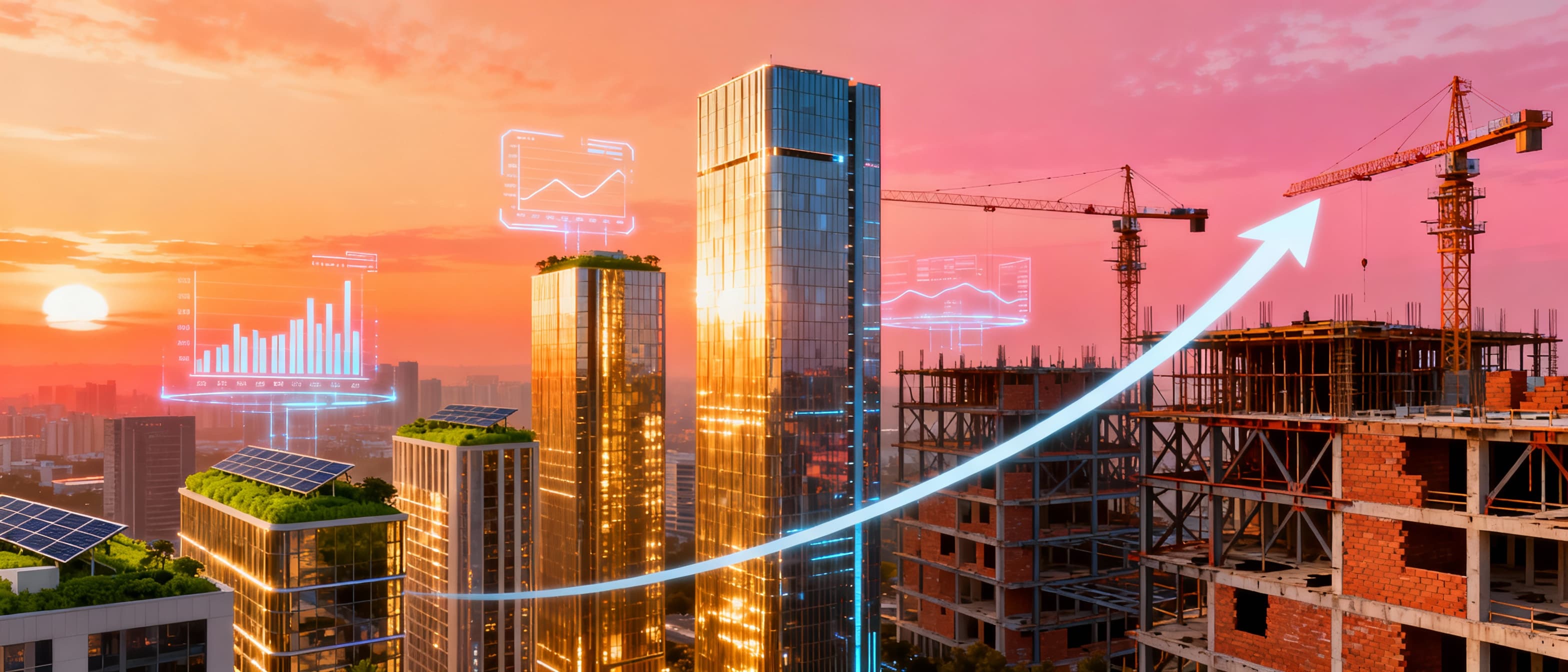
India's Real Estate at an Inflection Point
India's real estate sector has entered its most dynamic phase yet.
Valued at USD 482 billion in 2024 and projected to reach USD 1.18 trillion by 2033 (IMARC Group), the sector contributes nearly 8% to India's GDP, with the potential to touch 13% by 2030.
But while the numbers look impressive, the structure beneath is far from smooth. The sector's growth has outpaced its systems, creating a paradox where opportunity and inefficiency coexist.
The Core Challenges Holding Real Estate Back
Despite reforms like RERA and PMAY, real estate in India remains one of the most fragmented industries. The problems are systemic:
1. Policy Gaps in Implementation
Regulatory frameworks exist on paper, but enforcement varies by state. Delays in land approvals, inconsistent RERA application, and slow dispute resolution still discourage investors.
2. Data Without Insight
Real estate generates enormous data on land records, supply, absorption, and pricing, yet less than 10% of this data is structured or used effectively. This lack of transparency leads to pricing mismatches, speculative investment, and buyer hesitation.
3. Fragmented Developer Ecosystem
India has thousands of small- to mid-sized developers, often operating without standardized processes. This hyper-fragmentation leads to inconsistent quality, project delays, and financial instability.
4. Land Ownership & Title Risks
Ambiguous ownership patterns and overlapping titles remain among the biggest risks. While digitization efforts like DILRMP (Digital India Land Records Modernization Programme) are underway, progress is uneven.
5. Construction Inefficiency
Traditional construction methods are slow and vulnerable to cost escalation. Modular and prefab technologies common globally still account for less than 3% of India's total construction volume (CREDAI 2024).
The Structural Shifts Reshaping the Industry
Despite challenges, positive change is underway, both regulatory and technological.
1. RERA's Maturity
Since its introduction in 2016, the Real Estate (Regulation and Development) Act has increased accountability. Over 114,000 projects and 95,000 agents are now registered nationwide (as of 2025, RERA Portal Data).
2. Smart Cities and Urban Planning
The Smart Cities Mission, with an investment of ₹7.5 billion, is reshaping infrastructure across 100+ cities. Urban land is being reimagined for better livability, sustainability, and integrated housing.
3. Rise of Tier 2 & 3 Markets
As metros saturate, Tier 2 cities like Indore, Jaipur, Ahmedabad, and Kochi are witnessing double-digit growth. According to CBRE, property values in these cities rose 17.6% in 2024, outpacing metros.
4. Tech-Enabled Real Estate
Proptech startups, digital registries, AI-led valuation tools, and modular design software are starting to change how assets are planned and executed. India's proptech industry, valued at $500 million, is expected to grow 5x by 2030.
The Road Ahead: From Unorganized to Unstoppable
For India to fully realize its real estate potential, the next phase must focus on systemization, not just expansion.
This means:
- •Data transparency across all state registries.
- •Modular construction incentives to speed up affordable housing.
- •Strict, uniform RERA enforcement across states.
- •Collaboration between developers, financiers, and tech innovators.
The opportunity is immense, but only if India builds smarter, faster, and cleaner.
The next decade will define the DNA of Indian real estate.
Growth alone won't make the sector successful; efficiency, technology, and trust will.
Want to stay informed about India's real estate transformation?
Subscribe for trend analyses, data insights, and smart city updates.
Subscribe Now